KUALA LUMPUR – The United States’ decision to embrace the title of Secretary of War instead of Secretary of Defence reflects a troubling shift in its political and military direction, raising questions about its commitment to global peace.
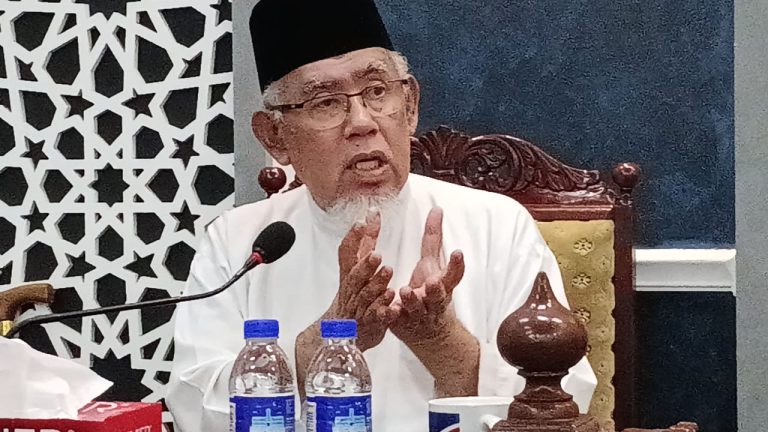
President of the Malaysian Consultative Council of Islamic Organizations (MAPIM), Mohd Azmi Abdul Hamid, said the move was more than a change in terminology, as it reflected a political philosophy and military mindset that deserved serious international scrutiny.
He said US President Donald Trump signed Executive Order 14347 on September 5, 2025, authorising the use of the secondary designation Department of War and Secretary of War.
The order emphasised America’s willingness to fight and win wars rather than merely defend itself.
“America must understand that military supremacy does not automatically translate into moral authority,” he said in an opinion statement dated November 10.
Azmi questioned how a country that had long portrayed itself as a champion of democracy, freedom and international peace could become increasingly comfortable with rhetoric that glorified war.
He said the role of a defence secretary should prioritise national security, conflict prevention and ensuring that military power remained accountable under the law.
However, the adoption of the title Secretary of War projected a different political outlook, in which military confrontation appeared to be a central instrument of national power.
He also highlighted America’s military interventions in Iraq, Afghanistan, Libya and Syria, as well as the escalating confrontation involving Iran.
According to him, such interventions had destabilised societies, displaced millions of people and destroyed livelihoods, leaving future generations to bear the consequences of conflicts they never chose.
“The question is no longer whether America possesses the military capability to wage war, but whether it has the political wisdom and moral restraint to avoid unnecessary conflicts,” he said.
On international law, Azmi stressed that no country, including the United States, was above its obligations under the United Nations Charter and international humanitarian law.
He said allegations involving unlawful attacks, extrajudicial killings, indiscriminate bombardment and violations of international humanitarian law must be independently investigated.
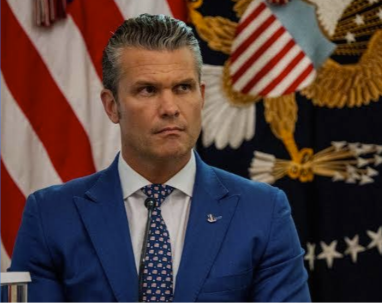
He also referred to the controversy surrounding US Defence Secretary Pete Hegseth, following Republican Congressman Thomas Massie’s introduction of eight articles of impeachment against him on November 9, 2026.
The allegations included matters concerning the Iran war and abuse of power, although they had yet to be established as judicial findings.
Azmi further questioned the influence of the military-industrial complex in shaping America’s foreign policy, pointing to the country’s substantial defence spending, arms manufacturers and military contractors.
He said prolonged military confrontation could create economic and political interests that made genuine peace efforts increasingly complicated.
“War generates contracts, military escalation creates demand for weapons, while regional instability creates opportunities for strategic intervention,” he said.
Meanwhile, Azmi described Palestine as one of the clearest examples of what he called America’s moral contradiction.
He said Washington had provided extensive military, financial and diplomatic support to Israel for decades, despite Palestinians continuing to face occupation, displacement, destruction and violations of their fundamental rights.
He questioned how the United States could champion international law and human rights while continuing to shield an ally from meaningful international accountability.
“America cannot indefinitely expect the international community to accept its declarations of moral leadership while ignoring the consequences of its own policies,” he said.
Azmi also urged the international community to reject the normalisation of war as a primary instrument of international relations.
He called on the United Nations, the Organisation of Islamic Cooperation (OIC), ASEAN, BRICS and the Global South to strengthen collective efforts against unilateral military aggression.
He said smaller nations should not be forced to live under the constant threat of military calculations made by powerful countries.
“The world needs leadership that invests in peace, food security, education, healthcare, humanitarian cooperation and equitable economic development.
“Military power without moral responsibility is a threat to humanity,” he said.
In conclusion, Azmi stressed that a nation’s greatness should not be measured by its ability to wage war, destroy targets or defeat its enemies.
Instead, he said true greatness was demonstrated through restraint, respect for the sovereignty of other nations, protection of innocent lives and commitment to a just international order.
“History will not judge America merely by the wars it has won, but also by the lives it has destroyed, the injustices it has tolerated and the peace it has failed to pursue.
“The world does not need another Secretary of War. It needs leaders with the courage to make peace,” he said. – DETIK MALAYSIA
About the Author