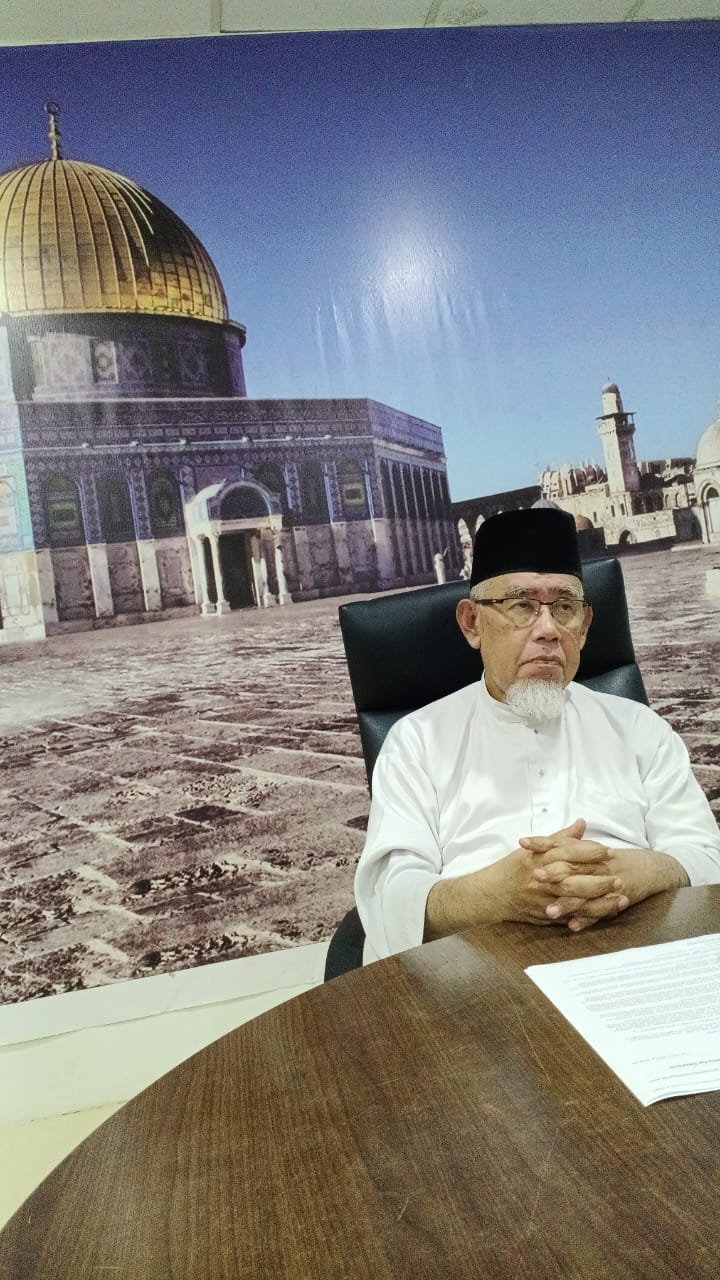

KUALA LUMPUR – Malaysian Consultative Council of Islamic Organisations (MAPIM) has congratulated filmmakers Yuval Abraham and Rachel Szor after their documentary NAZA won the Special Jury Prize at the 83rd Venice International Film Festival.
MAPIM President Mohd Azmi Abdul Hamid said the recognition was significant as the documentary brings deeply disturbing testimony before the international public concerning the mechanisms, intelligence systems and military processes used in Israel’s war on Gaza and their devastating consequences for Palestinian civilians.
The film is based on interviews with 24 Israeli military and intelligence insiders whose identities were protected.
Azmi said the award was more than a cinematic achievement, describing it as recognition of the importance of confronting the truth about what has happened to Gaza.
“NAZA forces the world to confront a fundamental question – when the killing of civilians is repeatedly enabled by systems, procedures, intelligence technologies and predetermined calculations, can the world continue to describe the resulting mass death as merely accidental collateral damage?” he said in a statement today.
The documentary examines the systematic character of civilian deaths and the use of advanced surveillance and targeting technologies in military operations in Gaza.
The film’s title itself refers to a military intelligence term associated with estimating expected civilian casualties from an airstrike.
KILLING CANNOT BE NORMALISED
Azmi said Palestinians in Gaza had endured bombardment, mass displacement, destruction of homes and civilian infrastructure, deprivation and the collapse of essential conditions for human life for almost three years.
“The world has seen the images. It has heard the testimonies. It has received reports from humanitarian organisations, journalists, doctors, international institutions and human rights investigators.
“Yet the killing continues to be discussed through the sterile vocabulary of military operations.
“NAZA cuts through that language. It asks us to look at the systems behind the numbers,” he said.
According to Azmi, the documentary questions whether civilian deaths could be treated as an inevitable statistic when those making targeting decisions are aware of the presence of civilians.
It also asks whether technology could become an instrument for distancing human beings from the moral consequences of killing.
“Most importantly, it asks whether the world will continue to remain silent when evidence points towards a system in which civilian deaths have become foreseeable, calculated and normalised,” he said.
‘BY DESIGN’ MUST BE TAKEN SERIOUSLY
Azmi said he was particularly struck by the documentary’s challenge to the narrative that the massive civilian death toll in Gaza could simply be explained as unintended consequences of war.
The testimonies presented by NAZA raise the deeply disturbing possibility that the destruction involved deliberate systems and policies in which civilian casualties were anticipated as part of military targeting decisions, he said.
“This is why the phrase ‘killing by design’ deserves serious international scrutiny.
“If civilian deaths are foreseeable, repeatedly tolerated and embedded within operational procedures, the international community cannot simply look away.
“The question of accountability must follow the evidence,” he said.
Azmi stressed that no state should be permitted to place itself beyond scrutiny merely because it possesses superior military technology, political influence or powerful international allies.
COURAGE OF THE FILMMAKERS
Azmi also commended Abraham and Szor for undertaking the difficult work.
Their position as Israeli filmmakers gives the documentary additional significance, he said, as they challenge the dominant narrative from within their own society.
Their decision to document the testimony of Israeli military and intelligence personnel, under conditions designed to protect their identities, demonstrates the importance of investigative journalism and independent documentary filmmaking in exposing realities that powerful institutions may prefer to conceal.
The approximately 25-minute standing ovation following the Venice premiere demonstrated the profound impact the film had on its audience, Azmi said.
He added that the Special Jury Prize carried a message extending far beyond the film industry.
“Truth has entered the cultural and public consciousness,” he said.
WORLD MUST MOVE FROM WITNESSING TO ACCOUNTABILITY
Azmi called on governments, parliaments, international institutions, media organisations, universities, civil society organisations and faith communities to study the evidence presented in NAZA seriously.
He said the international community must move beyond statements of concern.
“All credible evidence concerning the targeting and killing of civilians in Gaza must be independently investigated,” he said.
Azmi also called for accountability where evidence establishes individual or command responsibility for war crimes or crimes against humanity.
He urged the protection of whistleblowers and journalists who expose evidence of serious violations from intimidation, retaliation and political persecution.
He also called for the immediate protection of Palestinian civilians and an end to impunity.
“International law must apply equally to all states and all actors,” he said.
GAZA MUST NOT BECOME A FOOTNOTE IN HISTORY
Azmi said future generations would ask a painful question: “When the world knew, what did the world do?”
“The people of Gaza should not have to wait for history to pronounce judgement on their suffering.
“They need justice now. They need protection now. They need humanitarian access now.
“They need the siege and systematic deprivation to end.
“They need their right to live with dignity, security and freedom to be recognised,” he said.
Azmi stressed that the principle of “Never Again” must apply to every human being, regardless of ethnicity, religion or nationality.
He congratulated Abraham, Szor and the entire NAZA production team on receiving the Special Jury Prize at Venice.
“This award belongs to cinema, but its message belongs to humanity.
“NAZA has opened another window through which the world can look into Gaza.
“Now the world must have the courage to look, to listen and to act,” he said.
Azmi added that the evidence and testimonies presented in the documentary should prompt the international community to address the issue of accountability.
“The cameras have recorded the evidence. The witnesses have spoken. The jury has recognised the film.
“The international community must now answer the question of accountability.
“Justice for Gaza cannot remain a slogan. It must become action,” he said. – DETIK MALAYSIA
About the Author