
KUALA LUMPUR – The Malaysian Consultative Council of Islamic Organizations (MAPIM) has called on the MADANI Government to adopt a clear humanitarian framework to protect the dignity, rights and welfare of Rohingya refugees in Malaysia while safeguarding national interests and security.
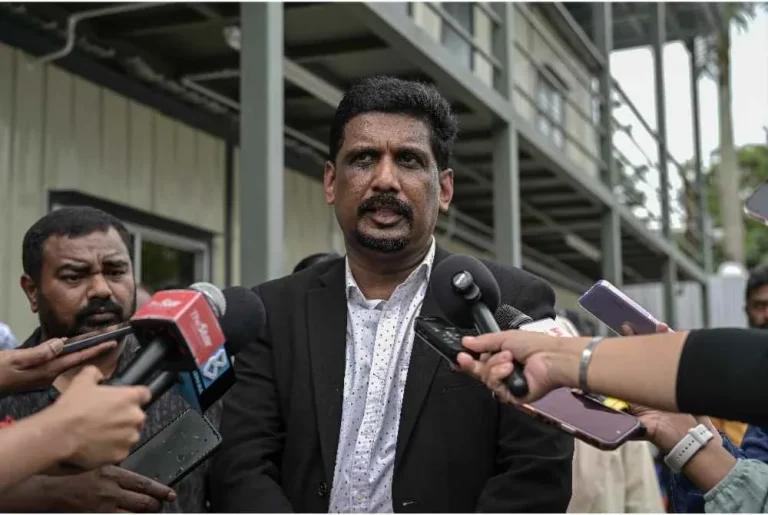
MAPIM president Mohd Azmi Abdul Hamid said Malaysia’s diplomatic engagement with Myanmar must be accompanied by practical measures to ensure that humanitarian responsibilities are fulfilled without compromising the legitimate concerns of Malaysian citizens.
He said Prime Minister’s statement on October 28 that dialogue with Myanmar offered the best hope of resolving the Rohingya crisis reflected the Government’s determination to pursue diplomacy after decades of criticism failed to change Myanmar’s policies.
The Prime Minister also acknowledged that approximately 200,000 people from Myanmar had sought refuge in Malaysia, creating substantial pressure on the country and growing public concern.
“MAPIM recognises the importance of diplomatic engagement. However, the success of diplomacy must be measured by its ability to protect human lives, restore fundamental rights and produce a durable solution, not merely by the number of people returned to Myanmar,” he said in a statement today.
Azmi said the MADANI framework, which places humanity, compassion, respect, trust and justice at the centre of governance, must guide Malaysia’s treatment of Rohingya refugees.
He said a humane policy must be implemented with discipline, accountability and clear safeguards while addressing concerns over public resources, national security, immigration management and social cohesion.
Diplomacy must not replace justice
Azmi said the Rohingya had endured decades of systematic exclusion, denial of citizenship, restrictions on movement, limited access to essential services, violence and forced displacement.
He said the crisis could not be resolved simply by arranging their return to a country where the conditions that forced them to flee remained unresolved.
He urged the Government to ensure that negotiations with Myanmar included five key commitments, beginning with guarantees for the safety of returnees and an end to persecution.
He said such guarantees must be independently verified rather than based solely on assurances from the authorities receiving them.
Myanmar must also address the Rohingya’s right to citizenship or provide an effective, non-discriminatory pathway to legal nationality.
“Any return arrangement that leaves the Rohingya stateless, vulnerable and without recognised rights will reproduce the same crisis,” he said.
Azmi said returnees must also have access to homes, land, livelihoods, education and healthcare, as well as freedom of movement and protection from arbitrary detention, forced labour and forced military recruitment.
He added that independent humanitarian agencies must be allowed to monitor conditions before, during and after repatriation, including confidential access to returnees and mechanisms to report violations without retaliation.
Malaysia must also retain the authority to suspend any return process if credible evidence shows that the agreed conditions have not been met.
He stressed that no Rohingya refugee should be compelled to return to a situation where there was a real risk of persecution, torture or other serious harm.
“Return must be voluntary, informed, safe and dignified. This principle is essential to responsible refugee policy and consistent with the international protection principle of non-refoulement,” he said.
Four pillars for refugee protection
Azmi said MAPIM had proposed a practical policy framework built around four interconnected pillars to manage the Rohingya refugee situation in Malaysia.
The first is to protect refugees while managing national responsibilities through a coherent administrative system developed in cooperation with the United Nations High Commissioner for Refugees (UNHCR).
He said the Government should improve refugee registration, identity documentation, screening and case management to distinguish refugees and asylum seekers from other categories of migrants.
A transparent registration system would strengthen security screening, reduce exploitation and help the authorities plan public services more effectively.
Registered refugees should also receive temporary protection documents and clear rules governing residence, movement, employment and access to essential services.
At the same time, humanitarian protection must operate alongside lawful and proportionate enforcement against trafficking, smuggling, violence and other criminal activities.
MAPIM also urged the Government to restore effective UNHCR access to relevant immigration detention facilities to ensure protection needs could be identified before removal decisions were made.
The second pillar involves establishing a safeguarded temporary settlement mechanism through consultation with state governments, local authorities, host communities, employers, civil society and humanitarian organisations.
Azmi said the policy should provide appropriate shelter, basic healthcare, education for children, lawful livelihood opportunities and protection against exploitation.
He said temporary protection must have a clear legal and administrative basis to prevent refugees from facing indefinite uncertainty and local communities from bearing an unmanaged burden.
The Government should also establish transparent channels for public complaints, monitor the impact on host communities and publish regular reports on costs, service delivery and compliance.
“The principle is straightforward: protect refugees humanely, manage their presence responsibly and ensure that Malaysian communities are not left to bear the burden without adequate support,” he said.
The third pillar is to make repatriation conditional, voluntary and independently monitored.
Azmi said voluntary return to a safe country of origin was a legitimate component of a comprehensive refugee solution, but it should not become a numerical exercise driven by monthly targets or administrative convenience.
He urged the Government to publish safeguards governing repatriation arrangements with Myanmar, including eligibility criteria, informed consent procedures, independent verification and post-return monitoring.
Every potential returnee must receive accurate information about conditions in the destination area and the consequences of returning, with the right to decline without threats, coercion or punishment.
Special protection must also be provided for children, women at risk, survivors of violence, persons with disabilities and people with serious medical needs.
Azmi said the reported return of approximately 10,300 Myanmar nationals, with another 3,000 expected to undergo the process during October, required careful assessment.
He said the figures did not establish how many returnees were Rohingya, whether each return was genuinely voluntary or whether the conditions for safe and dignified return had been fulfilled.
The Government should publish disaggregated information, subject to privacy and protection requirements, he added.
Malaysia urged to mobilise ASEAN support
The fourth pillar calls for Malaysia to mobilise ASEAN and international burden-sharing, as the country cannot resolve the Rohingya crisis alone.
Azmi said Myanmar bore primary responsibility for addressing the persecution and exclusion that had driven displacement, while the international community must contribute meaningfully to protection, humanitarian assistance and durable solutions.
He urged Malaysia to use its diplomatic engagement to strengthen ASEAN cooperation through coordinated humanitarian access, regional protection arrangements and sustained pressure to remove discriminatory barriers affecting the Rohingya.
The Government should also press UNHCR, the Organisation of Islamic Cooperation (OIC), the United Nations and donor countries to expand resettlement opportunities, humanitarian financing and support for refugee-hosting communities.
Countries criticising Malaysia’s policies should demonstrate solidarity through concrete commitments, including resettlement places, financial assistance and technical support.
“Malaysia’s humanitarian responsibility must be matched by international responsibility-sharing,” he said.
Six immediate policy demands
Azmi said MAPIM had outlined six immediate measures for the MADANI Government to strengthen refugee protection and accountability.
These include issuing a clear national policy statement affirming that all engagement with Myanmar would uphold humanitarian protection, human dignity and the principle of non-refoulement.
The Government should also establish a national Rohingya coordination mechanism involving relevant ministries, UNHCR, humanitarian organisations, state authorities and representatives of affected communities.
Other proposals include introducing a transparent temporary protection framework covering registration, documentation, essential services, lawful livelihood opportunities and proportionate security screening.
MAPIM also called for a published repatriation safeguards protocol requiring informed and voluntary consent, individual protection assessments, independent monitoring and suspension of returns where serious risks persisted.
The fifth measure is to initiate an ASEAN and OIC burden-sharing initiative to mobilise funding, expand third-country resettlement and strengthen regional cooperation on the Rohingya crisis.
The sixth is to require regular public reporting on diplomatic progress, repatriation outcomes, protection incidents, refugee management costs and assistance received from international partners.
Azmi said the measures would demonstrate that the MADANI approach had a clear operational direction, measurable objectives and meaningful accountability.
Malaysia must balance humanitarian principles and national interests
Azmi acknowledged that public frustration over the refugee situation could not be dismissed, as Malaysians had legitimate concerns about the economic cost of refugee management, pressure on public services, immigration enforcement and the sustainability of prolonged displacement.
However, he said public confidence could not be restored by treating an entire refugee population as a security problem.
Instead, it required sound administration, transparent policies, fair enforcement and evidence that the Government was managing the situation effectively.
He said Rohingya refugees must also understand and respect Malaysian laws, while the Government ensured that policies were communicated clearly and applied fairly.
Malaysia’s historical commitment to humanitarian assistance and solidarity with oppressed communities, he said, carried an important moral responsibility that must be exercised practically, sustainably and consistently with national interests.
As a Muslim-majority country, Malaysia also had a moral obligation to uphold human dignity.
Azmi cited verse 70 of Surah al-Isra’, which states: “And We have certainly honoured the children of Adam.”
He said the principle affirmed the dignity of all human beings and called for policies that recognised the humanity of refugees while maintaining the legitimate responsibilities of the state.
In conclusion, Azmi said MAPIM supported constructive diplomacy with Myanmar where it offered a genuine opportunity to resolve the Rohingya crisis.
However, he urged the MADANI Government to sustain its engagement while insisting on verifiable commitments, transparent safeguards and measurable progress.
“The test of diplomacy is not whether Myanmar agrees to receive people back. The test is whether those people can return without fear, recover their rights, live in safety and rebuild their future with dignity,” he said.
Until those conditions were established, Malaysia must maintain an effective framework for temporary protection, responsible refugee management and international burden-sharing.
He said the MADANI approach should demonstrate that compassion and national responsibility could reinforce each other, allowing Malaysia to protect its citizens, manage its resources and uphold humanitarian principles simultaneously.
MAPIM urged the Government to ensure that no diplomatic arrangement sacrificed human dignity for administrative convenience and that no refugee was returned to persecution in the name of resolving a crisis.
A just solution, he said, required Myanmar to address the root causes of displacement, Malaysia to maintain humane and effective protection arrangements, ASEAN to exercise regional responsibility and the international community to share the burden.
“That is the MADANI approach Malaysia must pursue: principled diplomacy, responsible governance, shared responsibility and humanity with accountability,” he said. – DETIK MALAYSIA
About the Author