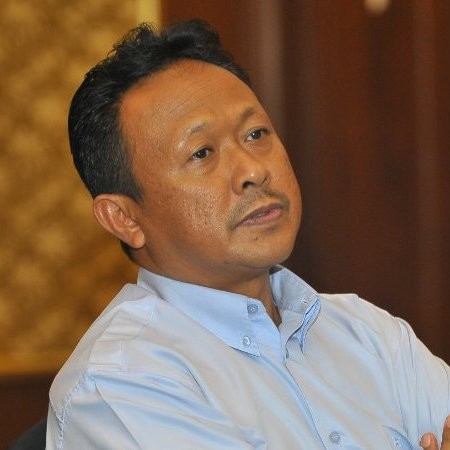
By Dr. Ageng Kamari
Activist, MAPIM (Uyghur Issues Portfolio)
GOMBAK — Every crisis presents various possible solutions, but when a low-risk and safe option is available, there is little reason to choose a path that carries greater risks.
That was the view expressed by Dr. Ageng Kamari, secretary-general of Gerakan Ekonomi Mengamankan Alam (GEMA), who called for greater wisdom, civility and strategic thinking in addressing regional issues.
He said Parliament represented the voice of the nation and that any decline in the standard of debate, particularly when it involved discourteous language and personal attacks, could affect not only individual lawmakers but also the country as a whole.
“Parliament is the voice of our nation. When the speech of elected representatives in this august House descends to a low standard — where courtesy, decency and dignity are lost, and constructive ideas are replaced by coarse and demeaning language — the risk is not borne by individuals alone, but by the entire nation,” he said.
Dr. Ageng Kamari said the public had never given a mandate for the country’s highest legislative institution to be conducted without proper standards of decorum and civility.
He added that the matter was particularly important when parliamentary statements could affect regional ties, neighbourly relations and the spirit of ASEAN cooperation.
He also cautioned against oversimplifying complex issues, saying every matter had its own context, characteristics and consequences that needed to be considered carefully.
“Sometimes we hear opinions that treat complex matters as simply as ‘two plus two equals four’. In reality, life is not so straightforward.
“Two cats and two schoolchildren do not simply make four identical things. Two rabbits and two lions cannot merely be counted as four animals without considering their differences,” he said.
Using the haze crisis in Kalimantan as an example, Dr. Ageng Kamari questioned whether sending a note of protest and taking no further action would be sufficient.
He said a government with various strategic options should look beyond short-sighted responses when addressing such challenges.
“For those without power, perhaps that is all they can do. But for a government with so many strategic options at its disposal, why remain trapped by short-sighted thinking?
“Where is the wisdom and quality of leadership we expect from our nation’s leaders?” he said.
He expressed hope that the Malaysian Cabinet would address such important matters with wisdom while acknowledging past mistakes and shortcomings involving the country’s lawmakers.
“I pray that the Malaysian Cabinet will address these weighty matters with the utmost wisdom — even recognising that errors and shortcomings have been made by our nation’s lawmakers in the past.
“Such is my hope and trust in the capability of YAB Dato’ Seri Utama Mohammad, or affectionately known as Tok Mat,” he said.
Dr. Ageng Kamari also stressed that domestic political disputes should not overshadow the challenges faced by neighbouring countries.
He said Malaysia should approach regional issues with humility and a sense of shared responsibility rather than arrogance or pride.
“Our neighbours are facing immense challenges. Why, as a good neighbour, do we behave as though their problems are none of our concern — and worse, respond with arrogance and pride?
“Who are we without our neighbours? If our neighbours are not secure, can we truly be secure ourselves? If our region is unstable, where will foreign investors find the confidence to come to our shores?” he said.
He concluded by highlighting the fifth principle of the Rukun Negara, Courtesy and Morality, which he said should guide the conduct of both the public and national leaders.
“This principle must guide the conduct of all our people and leaders. It is not merely advice; it is the moral foundation upheld by our Constitution and our laws,” he said.
Dr. Ageng Kamari is an activist with the Malaysian Consultative Council of Islamic Organisations (MAPIM) who has been involved in addressing domestic and international humanitarian issues, particularly advocating for the plight of Uyghur Muslims in China. – DETIK MALAYSIA
About the Author